
Water Quality That Supports Daily Operations
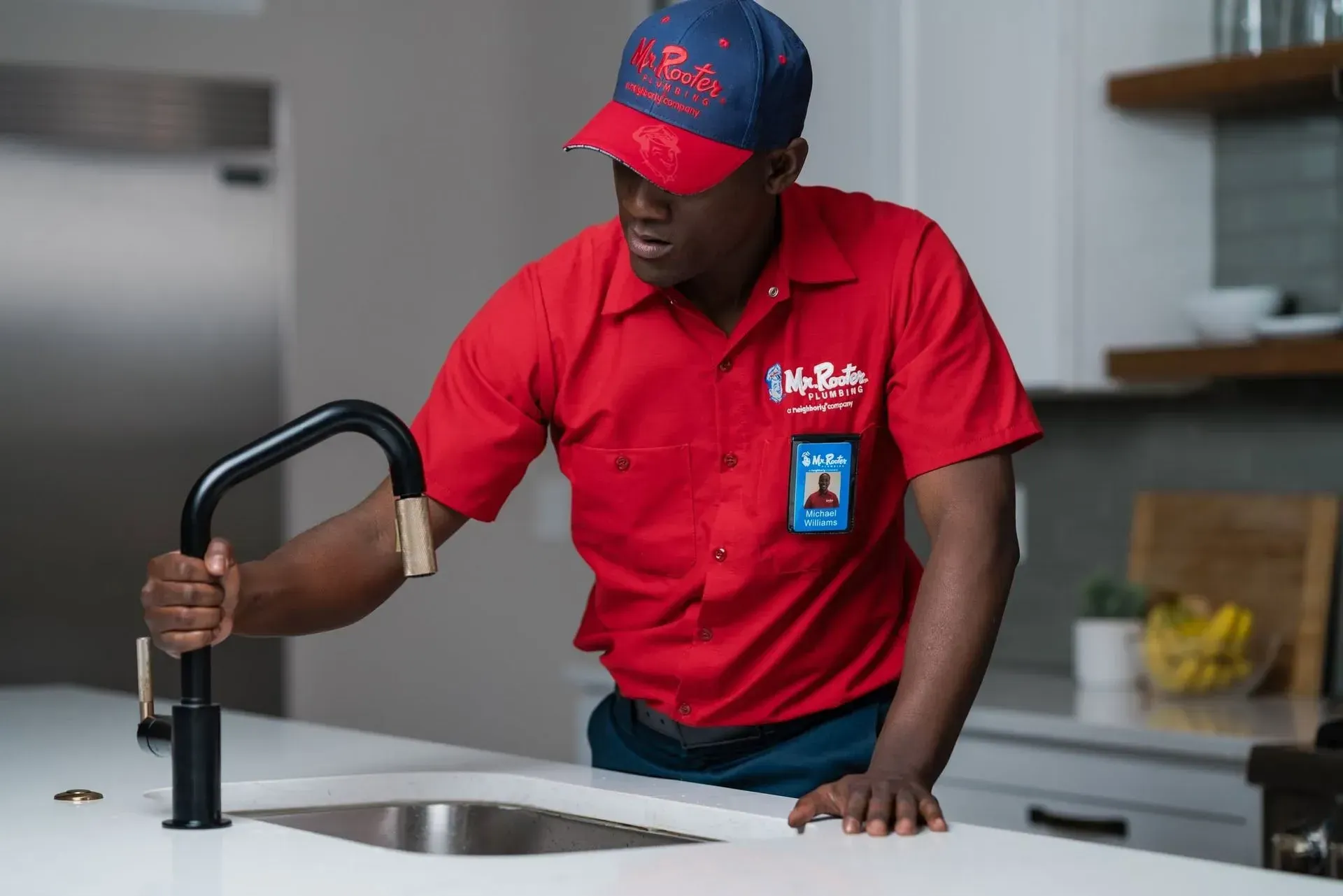
Commercial Water Filters and Softeners in Jackson for addressing hard water and water quality concerns affecting plumbing and equipment
Hard water and water quality issues affect Jackson-area commercial properties differently than residential homes because businesses experience higher water usage volumes, operate equipment sensitive to mineral content, and face accelerated buildup in plumbing fixtures that serve employees and customers throughout each day. Mineral deposits accumulate faster inside water heaters, clog aerators and spray heads, and leave visible staining on restroom fixtures that reflect poorly on facility maintenance. Mr. Rooter Plumbing of Irish Hills provides commercial water filtration and softening services to help businesses address water quality concerns and reduce mineral-related problems affecting everyday water use.
Water treatment evaluation involves testing current water chemistry to identify hardness levels, iron content, sediment presence, or other characteristics that interfere with equipment performance or create aesthetic concerns. Appropriate filtration or softening equipment selection depends on water source—whether municipal supply or private well—usage volume, specific quality issues identified through testing, and what outcomes matter most for business operations.
Request a water treatment consultation to evaluate whether filtration or softening addresses quality concerns affecting your commercial property.
What Proper Water Treatment Requires
Effective water treatment starts with understanding what's actually in the water rather than guessing based on visible symptoms—hardness testing measures dissolved calcium and magnesium concentrations, iron testing identifies staining potential, and sediment evaluation reveals particulate loads that clog screens and aerators. Treatment approach depends on test results: softeners exchange hardness minerals for sodium to prevent scale formation, sediment filters capture particulate matter before it reaches fixtures, and specialized filtration addresses iron, sulfur, or other constituents creating taste, odor, or staining problems.
After water treatment installation, you'll notice less frequent aerator cleaning, reduced mineral deposits on restroom fixtures, clearer water without discoloration, and longer intervals between water heater maintenance. Equipment operating costs may decrease as heating elements and heat exchangers transfer energy more efficiently without mineral insulation buildup, and cleaning staff spend less time removing hard water stains from sinks, toilets, and tile surfaces.
Commercial water treatment systems require sizing appropriate to peak flow demands and daily water consumption volumes, periodic media replacement or regeneration depending on system type, and monitoring to confirm treatment continues delivering desired results as water chemistry or usage patterns change. Systems serving private well water may need different approaches than those treating municipal supply, since well chemistry varies by aquifer depth and geological conditions while municipal water maintains more consistent characteristics.
Answers to Frequent Service Questions
Property managers and business owners considering water treatment typically ask about performance expectations, maintenance needs, and how systems integrate with existing plumbing.
What problems indicate a commercial property needs water softening?
Visible scale buildup on faucet aerators and showerheads, white mineral deposits on restroom fixtures, frequent water heater element replacement, spotting on glassware and dishes in food service operations, and increased soap or detergent consumption all suggest hardness levels that water softening would address.
How does water hardness affect commercial equipment differently than residential appliances?
Higher daily water volumes in commercial settings accelerate scale accumulation inside water heaters, boilers, dishwashers, and ice machines, reducing heat transfer efficiency and requiring more frequent descaling maintenance or earlier equipment replacement compared to residential use patterns with lower throughput and longer intervals between cleaning cycles.
Why do some Jackson-area properties experience iron staining in addition to hardness problems?
Well water drawn from certain geological formations contains dissolved iron that oxidizes upon contact with air, creating rust-colored staining on fixtures, laundry, and any surface contacted by water—iron concentrations vary significantly across the region depending on well depth and aquifer characteristics.
What maintenance does commercial water treatment equipment require?
Softeners need periodic salt replenishment and occasional resin bed cleaning, sediment filters require cartridge replacement at intervals determined by water quality and usage volume, and all systems benefit from annual inspection to verify proper regeneration cycles, confirm discharge operation, and assess whether media replacement or system adjustments are needed.
How do you determine proper water treatment system sizing for a commercial property?
Sizing calculations consider peak flow rate during maximum simultaneous fixture use, total daily water consumption, hardness removal capacity needed between regeneration cycles, and physical space available for equipment installation—undersized systems can't keep pace with demand, while oversized units waste water and salt during regeneration.
Mr. Rooter Plumbing of Irish Hills helps Jackson-area businesses evaluate water quality concerns and determine whether commercial water filtration or softening provides practical solutions for hard water and quality issues affecting plumbing fixtures and equipment. Schedule a water treatment consultation to discuss testing and system options for your commercial property.